What inspired you to join the Rotary Club of Queenstown?
|
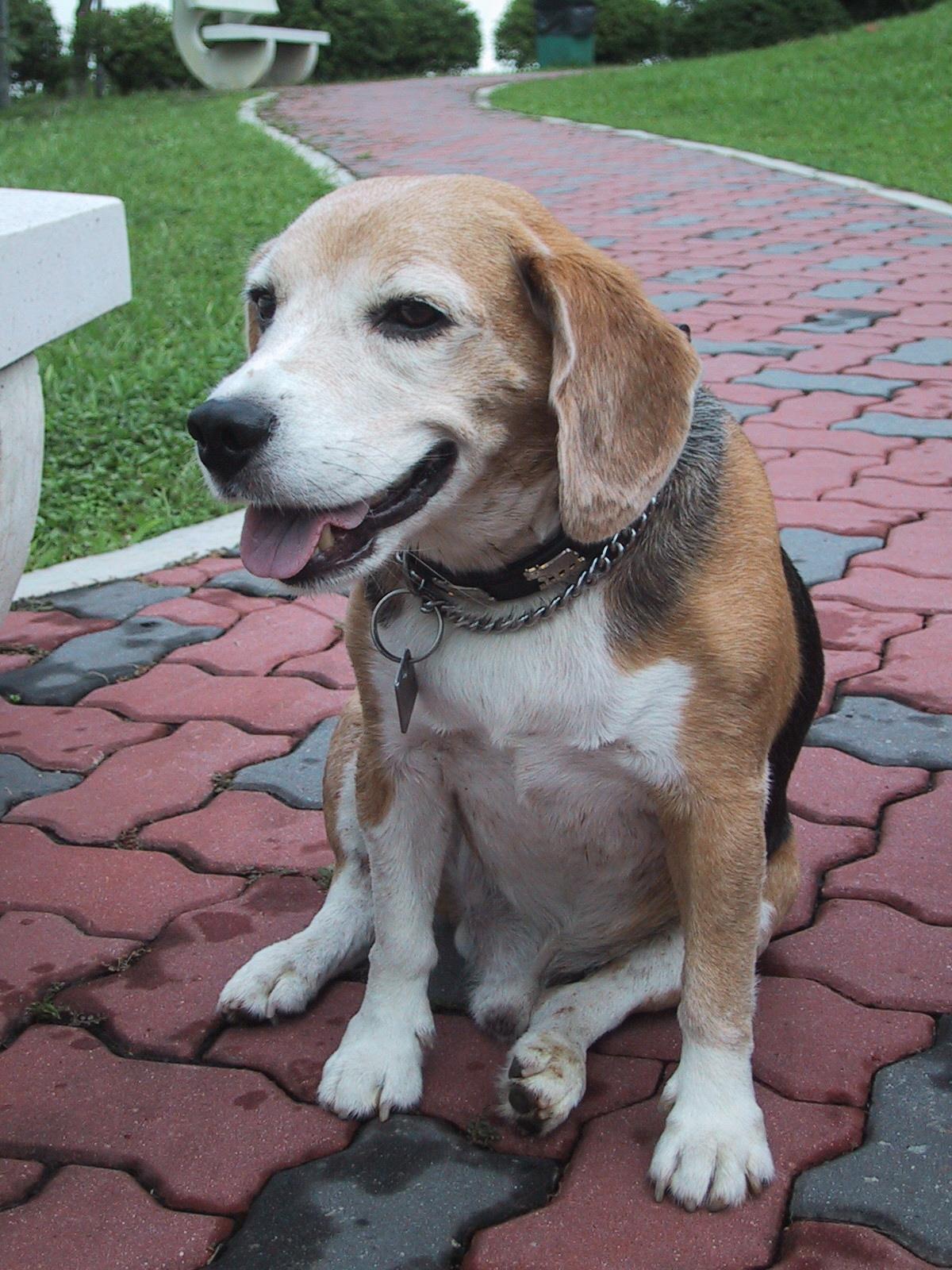
I was introduced to the Rotary Club of Queenstown by PP Peter DeBraux, who was living nearby my place. Every Saturday morning, he and his children jogged or cycled passed my semi-detached house and admired my playful dog named Elliot. After a few visits, they asked me if they could take him along on their short outings. So, we became friends. One day he asked me to join him for the Rotary luncheon, which at that time was held at the Meridien Hotel. The President then was PP Fred Binggeli, whom I knew from the Swiss Community. It didn’t take long for me get to know more of the members and I was inducted in February 1999.
|
 |
How has your personal journey with the club shaped your life over the years?
Firstly, I had to schedule the regular meetings into my business calendar. As a Far East Representative of a German Aluminium Company, I had to travel a lot, mostly in the Asia and Pacific Region. So, on Monday, the day of our regular meetings, I planned to be in Singapore.
With the District 3310 spanning over West and East Malaysia and Brunei, I got introduced to Rotary friends in Johor, Melaka, Sabah, Sarawak, Brunei and even the Free Trade Zone of Labuan, some of the areas I probably would never have visited without the Rotary connections.
Through Rotary projects, I got to see how needy people live and suffer in this world and, more importantly, how we can help them to improve their lives.
Can you share one of your most cherished memories from the early days of the club?
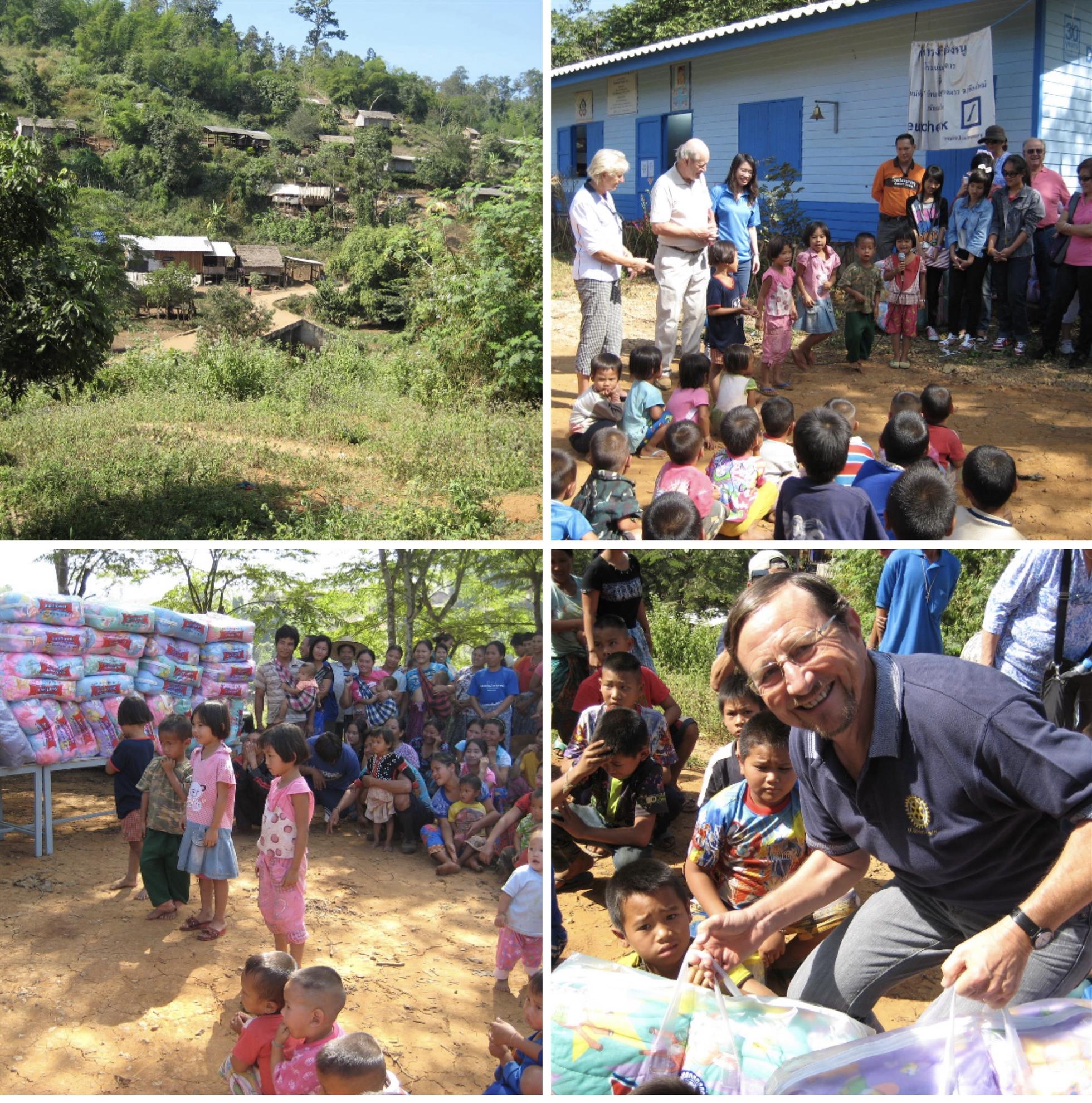
One memory I never forgot is probably our club members’ visit to Chiang Mai in December 2010, to meet up with the AIDS orphans RCQ supported through the RC of Chiang Mai South.
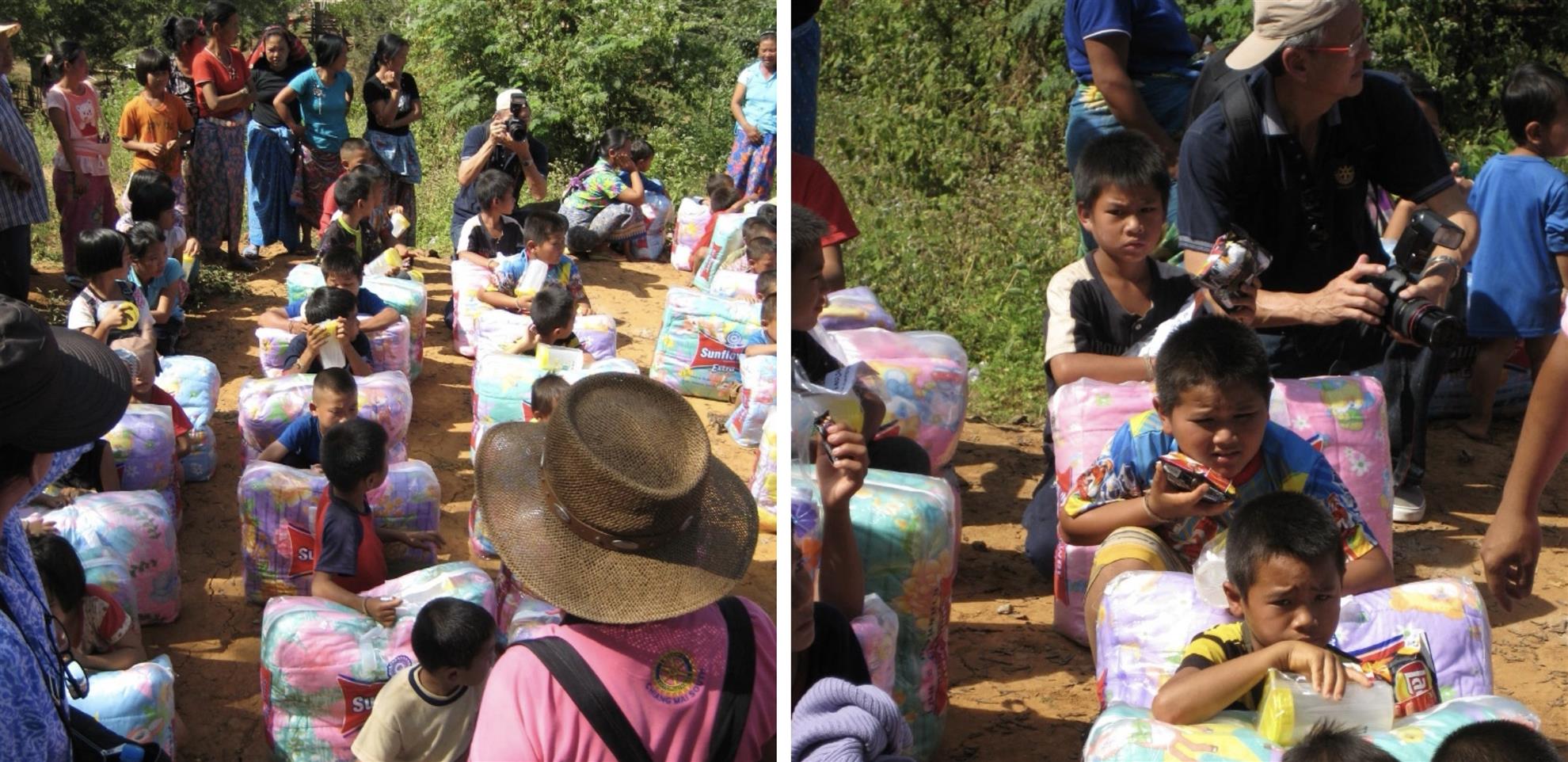
Our Sister Club had organised a visit to a rural village in the North, to distribute beds and beddings to the villagers. With pick-up trucks and car rooftops loaded with mattresses, and car booths full of pillows and blankets, we travelled almost 2 hours upcountry, partly on unpaved roads. I still remember the smiling faces of the many children getting some M&Ms while collecting the beddings for their waiting parents.
Visit to a rural village in the north of Chiang Mai to distribute mattresses and beddings.
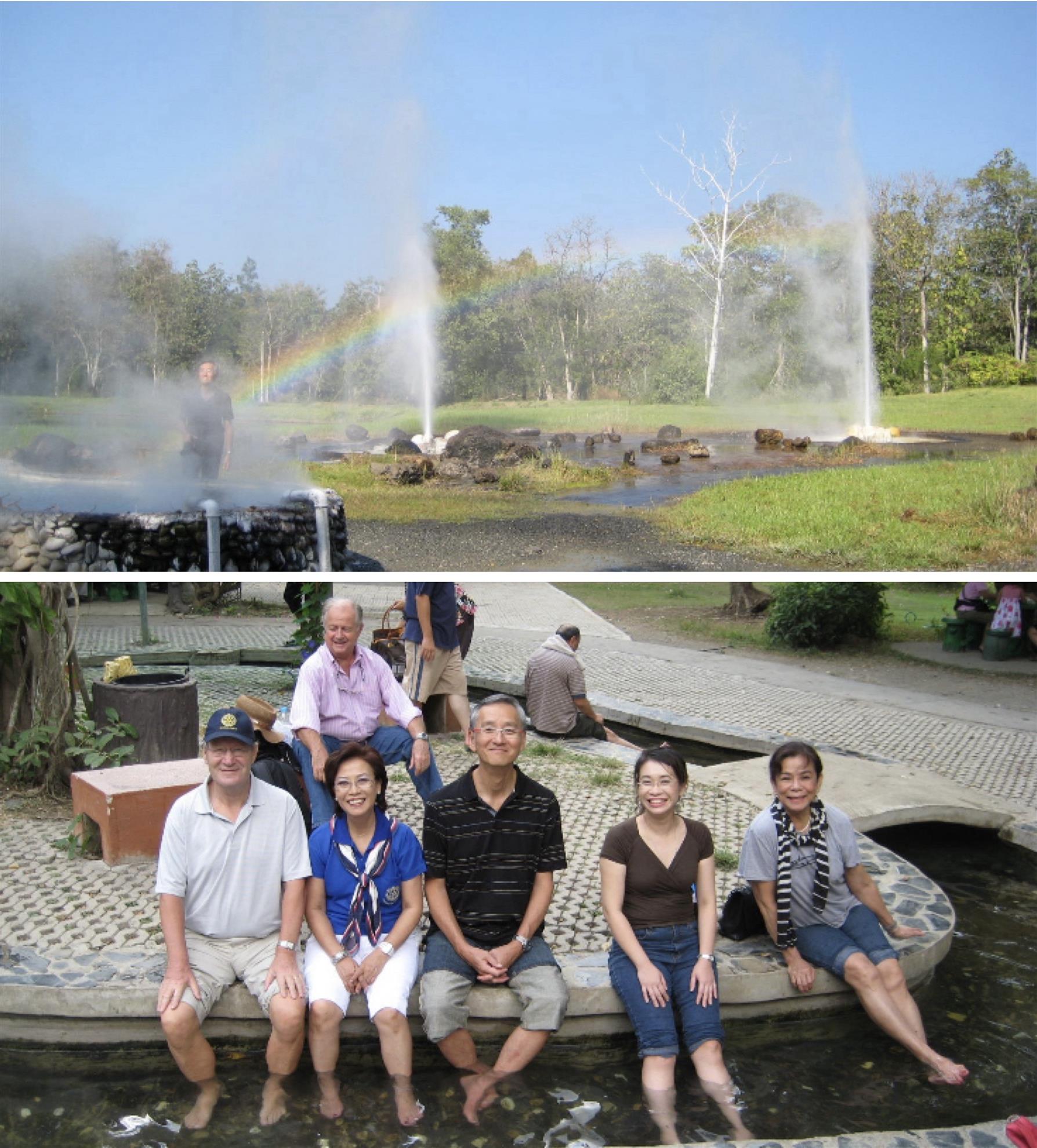
Naturally, there was always fun for us too in such a trip, like visiting a hot spring.
Another project that I will never forget was the Cataract operations for needy Indonesians in Bogor which our club helped to finance in 2012. Our Sister Club, the Rotary Club of Bogor, coordinated the operations of more than 20 residents whose eyesight was badly affected by cataract, but who could not afford to pay for the operation to remove it. They managed to get the free service of eye doctors of the Eye Hospital in Bogor which was founded by the wife of the former Indonesian President Habibie, Hasri Ainun Habibie. The hospital only charged US$100 per patient, covering their cost of the lens and consumables.
On the day of the operations, we Rotarians visited Bogor and we were allowed to follow the procedure in a conference room adjacent to the operating theatre. I will never forget when one of the patients, a grandfather in his 60ies, walked out of the operating theatre and hugged his grandchildren which he had never seen before. With only US$100, which he could not have afforded to pay, we changed the grandfather’s life and that of his family members.
How did your family react when you first joined the Rotary Club? Have they supported your involvement over the years?
Before I joined Rotary, my wife was a member of the Lions Ladies Club, but she didn’t enjoy it because so much was spent on lunches and other social events. She rarely joined me at Rotary events unless required, but she always supported my Rotary service.
What lessons from your Rotary experience have you shared with your children or grandchildren?
I don’t have children.
How did your professional life influence your work within the Rotary Club, and vice versa?
When I served as President 23 years ago, we didn’t have email or WhatsApp. Each weekend I prepared a weekly bulletin, and my office secretary faxed it to all members on Monday morning. Although she wasn’t a Rotarian, she became part of our club during my term. Unfortunately, I couldn’t persuade her to join.
Whenever I travelled for business, I tried to fit in a visit to a local Rotary Club. The insights of the local Rotarians and the information they shared helped me expand my business.
Were there any skills or experiences from your career that helped you contribute to the club’s growth or initiatives?
Not that I can remember.
Did being a part of the Rotary network open up any unexpected opportunities in your profession?
After I had retired, a Rotarian from another club asked me to join his company to help him in his lift business. Although that arrangement did not last very long, I became interested in the installation of home lifts and joined another company, for which I began promoting accessibility solutions for the elderly and disabled. With many elderly Rotary members in Singapore and Malaysia, I found Rotary Clubs an excellent platform to promote home lifts for retrofitting into existing bungalows. My talks in Rotary Clubs in Singapore and Johor about improving mobility at home resulted in several orders.
What personal passions or hobbies have you pursued outside of Rotary?
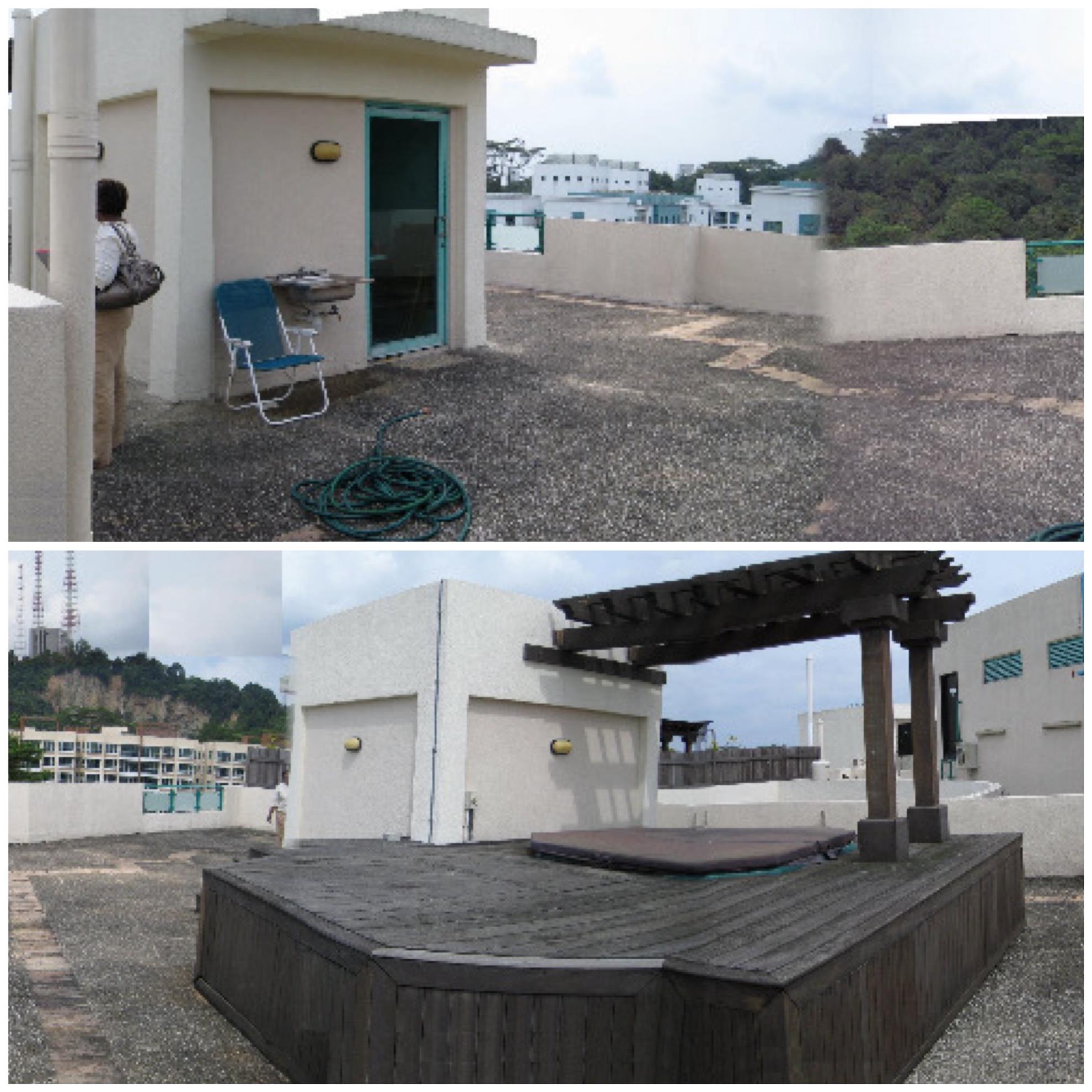
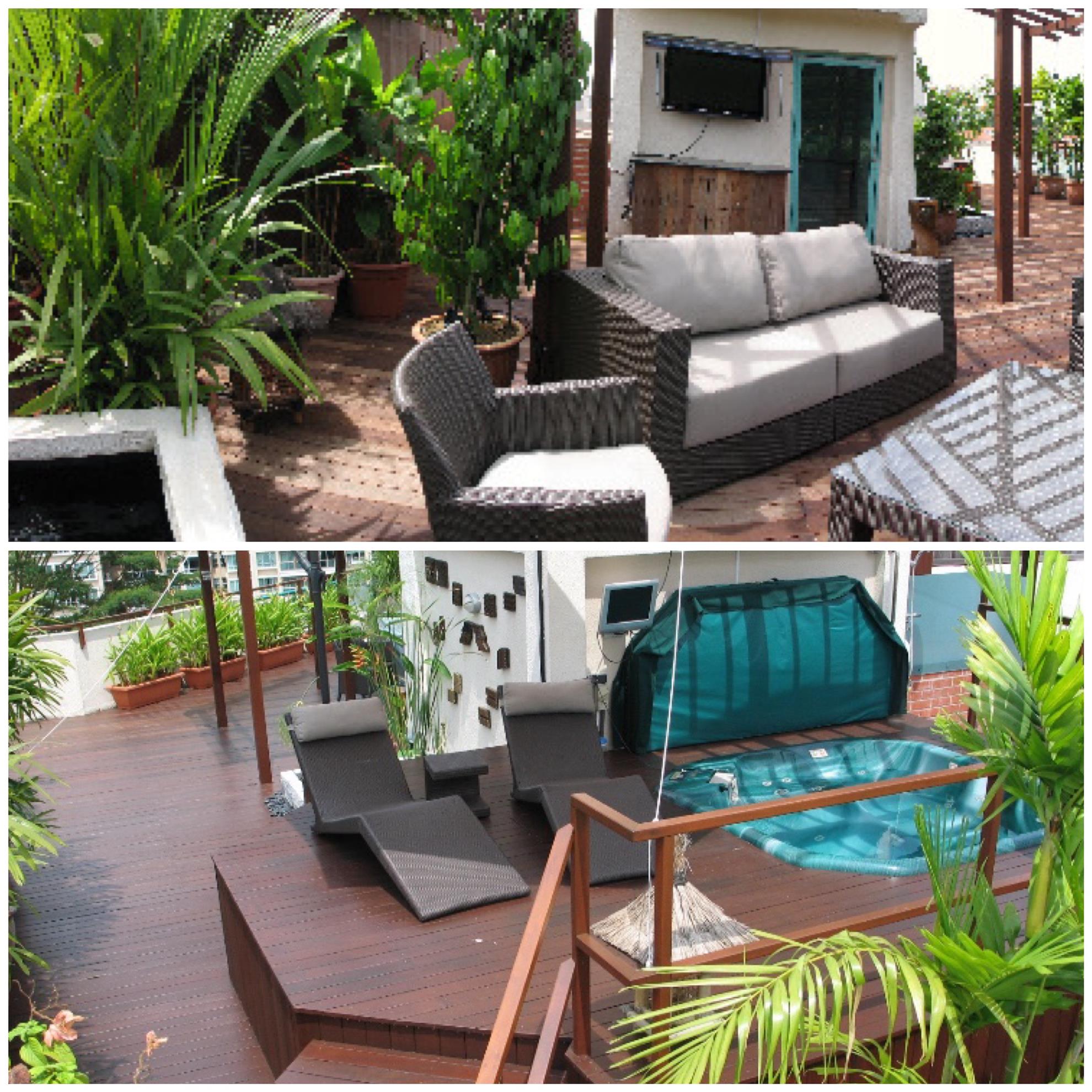
As a Swiss-trained precision mechanic and a graduate mechanical engineer I have both the theoretical and hands-on skills and knowledge in various manufacturing activities. Upon my retirement in 2007, my wive and I bought a penthouse which had an open roof terrace. However, the previous owner never made use of the open space on the upper level facing Bukit Timah, and the hot tub previously provided by the developer was no more in working condition. When we viewed the property, I immediately saw the potential for turning the roof terrace into our resort-type garden where we could spend our evenings in fresh air. With the help of a decking contractor and many hours of my own hands-on works, I created the space which many of our members remember from our raclette parties.
Before renovation
After redecoration
For many years, I served as a Council member of our Condominium Management Corporation and contributed with my technical knowledge to improve maintenance and upkeep.
I am still a Grassroots Leader in the Southaven Neighbourhood Committee under the People’s Association, helping to organise community activities and to provide feedback between our government and the residents of our estate.
Already during my childhood, my parents took me hiking in the Swiss mountains. Till today, I love walking countryside and to enjoy nature. Besides my regular golf at the Singapore Island Country Club, I hike every Wednesday 7 to 10 km with a group of Swiss Seniors living in Singapore. Our groups description on WhatsApp reads: “A group of elderly (dry aged but still good looking) outcasts with high moral standards regularly assembling for walking, talking and enjoy good wines in moderate quantities, and quality side dishes in a cosy environment”.
Have you ever had the chance to combine your personal interests with Rotary projects? If so, how?
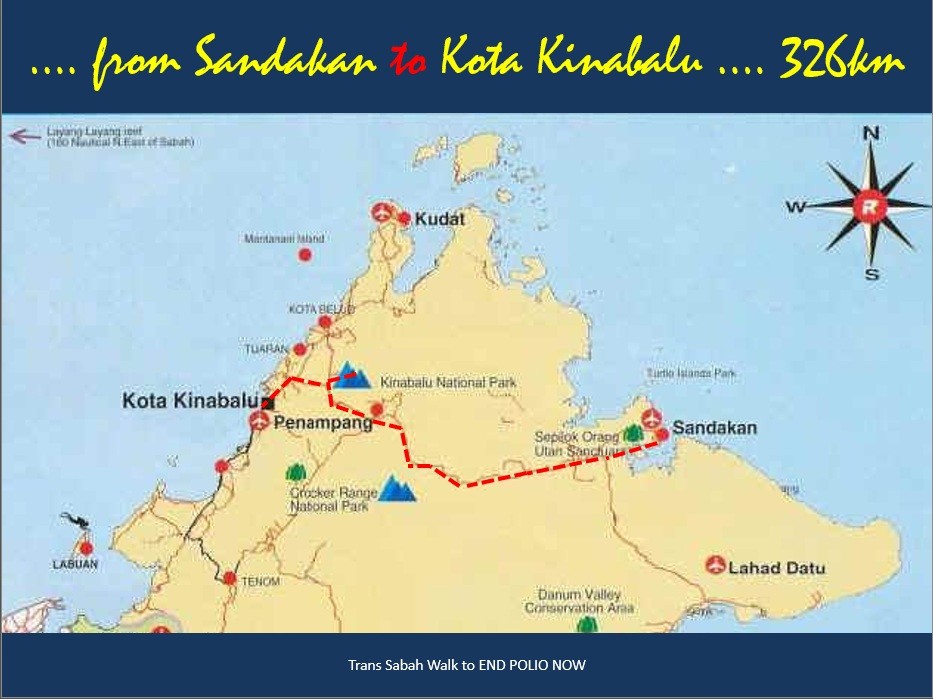
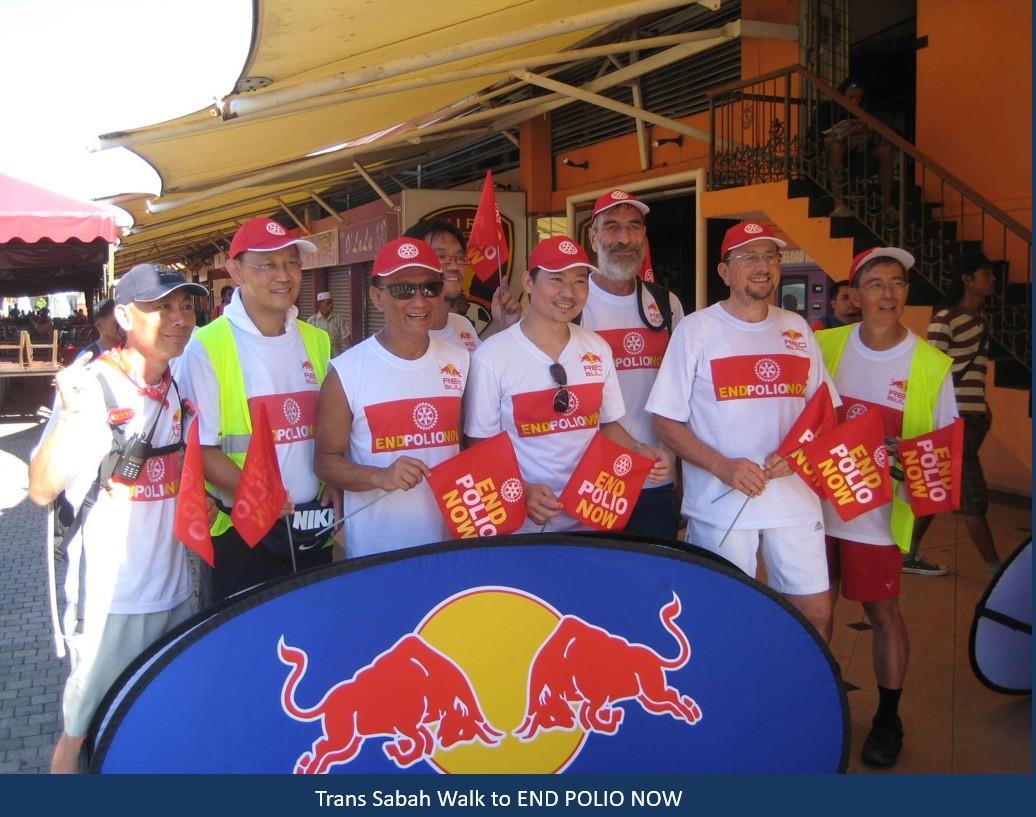
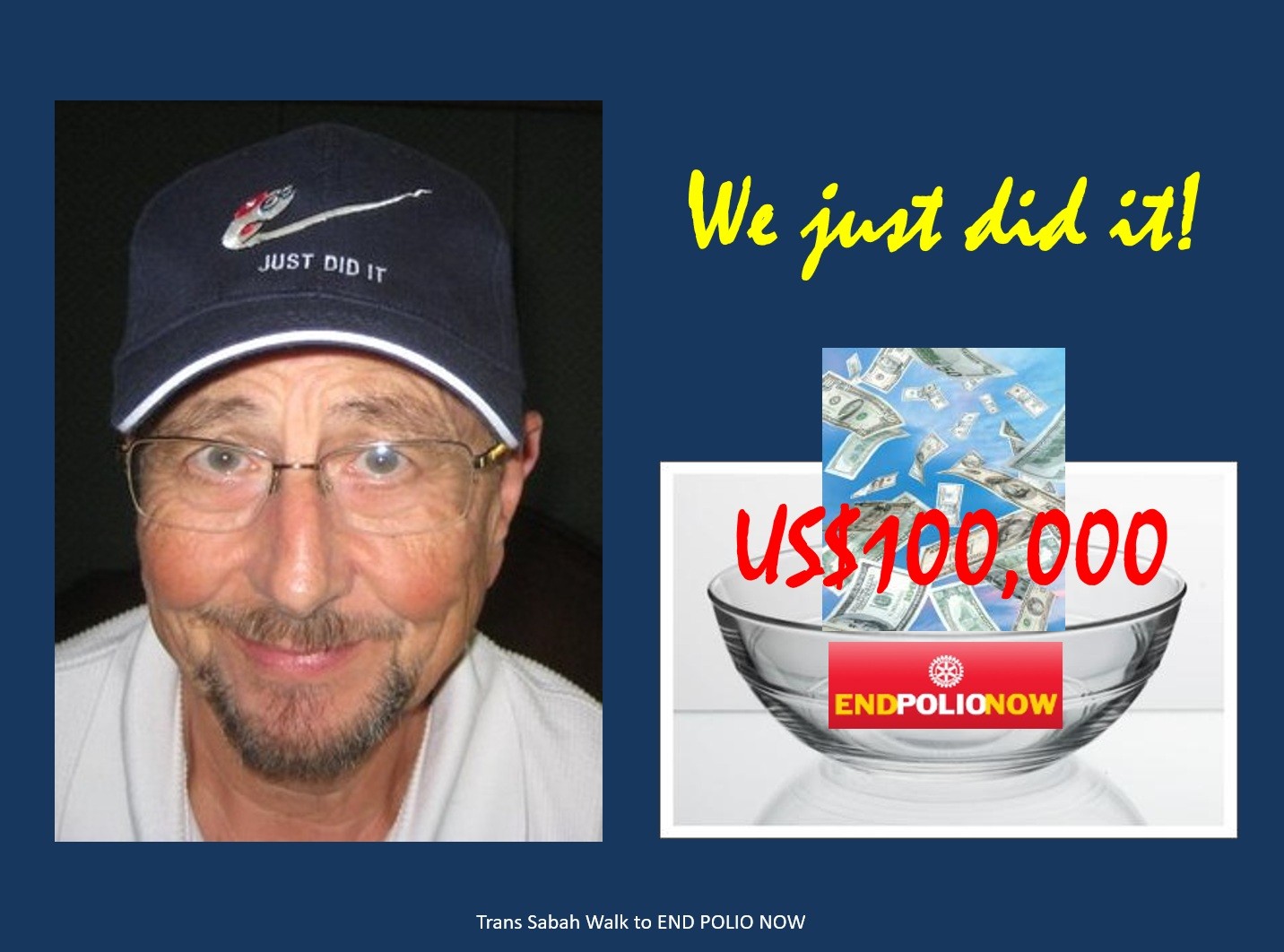
In November 2011, at the age of 65 years, I participated in the End Polio Walk organised by our District 3310. Together with 7 fellow Rotarians, we walked from Sandakan to Kota Kinabalu to raise money towards the End Polio Project of the Rotary Foundation. In 12 days, we covered 325 km, walking along the trunk road. We usually started around 4 am to avoid the heat during the day. Through sponsorships, we managed to collect about US$100,000.
What’s something you’ve always been passionate about, and how has Rotary allowed you to express or act on that passion?
As a trained precision mechanic and graduate mechanical engineer, I have succeeded in my assignments by doing work well and complete to minute details. Chris Chen, when he was District Governor in the Rotary Year 2007-08, appointed me to be his District Secretary. While I hate to record minutes of meetings, I don’t mind performing administrative works. He “volunteered” me to prepare the District Directory for his year as Governor. At that time, the District organisation was relatively new to me and I was unfamiliar with all the District Committees and its functions. It took me until September to prepare the final version of the District Directory 2007-08, which resulted in District Resolution that the District Directory must be ready for distribution during the District Training Assembly, which usually is held in April.
However, the quality of that Directory impressed future District Governors, and in 2012, incoming District Governor Chew Ghim Bok asked me if I would do it for his Rotary Year 2013-14. From that year on I compiled all the District Directories until the Rotary Year 2021-22, except for the Rotary Year 2016-17, when Michael Yee was District Governor and wanted to do it himself.
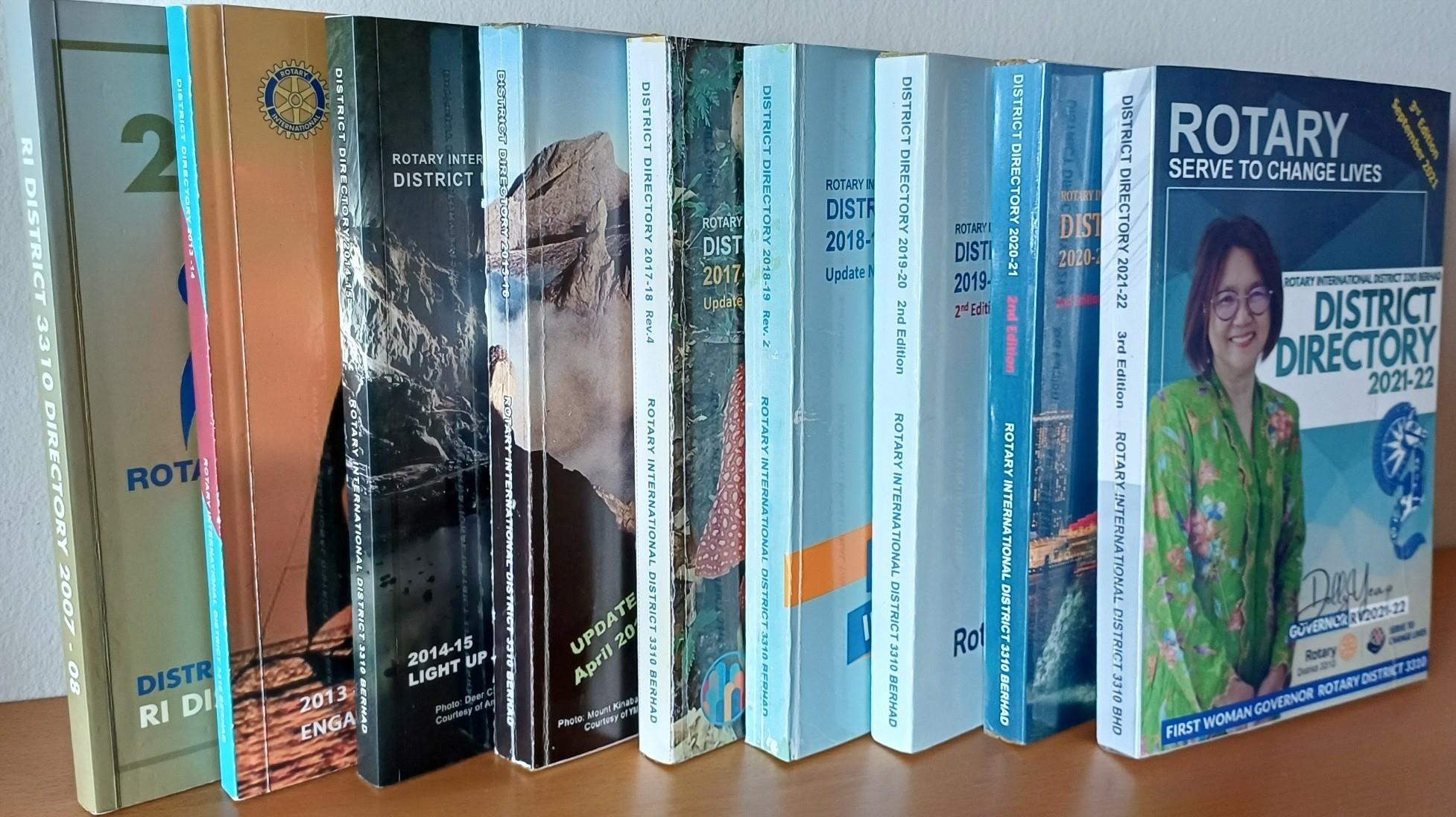
Preparing the District Directory needs not only high accuracy and focus on details, but the biggest problem was also to get the information from the more than 70 Rotary Clubs in our District 3310. I used to start collecting data in mid-January. However, at that time many clubs did not have their board members selected or appointed yet. So, half my work included chasing club presidents and district chairs to let me have their information, to enable me to compile the directories by early April, and to be printed and ready for distribution during the District Training Assemblies mostly held in Johor Bahru. If the printed books were not ready for distribution, the District incurred extra cost by having to dispatch them to the various clubs as far away as Tawau and Sandakan in Sabah/East Malaysia.
In 2018, we decided to go digital and we stopped printing hard copies of the District Directories, saving the District the printing cost of about RM12,000 per edition. However, I spent quite some additional time in preparing presentations on how to use the digital copy of the District Directory and conducting talks at many Rotary clubs.
Today, the Directory is called "D3310-Leadership-Directory" and you can download the latest version from the District’s ClubRunner Webpage
https://portal.clubrunner.ca/50177/ . If you visit this site the first time, click on “Member Login” and on the next page register as “New User?”.
The District Directory made me famous in all clubs of our District 3310.
Whenever I visit another club in our District, Rotarians remember me as the District Directory administrator who would never let go until he got the correct information! Still today, 4 years after retired from this task, Rotarians ask me "when do we get a complete directory again that contains all the information?"
How did you balance your family, career, and Rotary commitments over the years?
I treated Rotary as my first hobby. My priorities were always: First my wife, second my career and third came Rotary. Strict adherence to this principle made both my wife and my boss happy, and left sufficient time for Rotary.
Was there ever a time when you considered stepping back from Rotary, and what made you stay?
As in all careers, be it in profession or in Rotary, you have sometimes low periods where you want to quit. At bad times I used to remember my dog’s habits: “Scratch the grass and walk away from it”. Nothing that I remember!
What were the most significant challenges the club faced during its inception, and how were they overcome?
I have joined the club long after its inception and I cannot comment on this.
How has the Rotary Club evolved in its mission, membership, and activities over the past 50 years?
I am a member for 25 years only. With more than 15 different nationalities in our club, we saw many members coming and going. For foreigners, Singapore was a temporary location before they moved on. All of them provided valuable ideas and contributed to the vibrant club. While our local members provided a solid background, newcomers quickly adopted to local customs. Every new board had its missions and completed them to the best of their abilities. Membership always fluctuated around 50, which I find is the ideal Rotary Club size for easy communication and management.
Are there any notable milestones or events in the club’s history that you feel particularly proud of?
Every time our Club gets a distinction or reward. It is always the teamwork that reflects achievements.
Can you highlight a project or initiative that you feel had the most impact on the community?
In earlier years, it was the Eye screening at Family Service Centre. Many people who cannot afford to go for regular health checkups may not realise that their eyesight is affected by a non-reversible illness, glaucoma. Many forms of glaucoma have no warning signs. The effect is so gradual that you may not notice a change in vision until the condition is in its later stages. Regular eye screening has helped many people to prevent early blindness.
How has the club’s approach to serving the community changed over time?
In Singapore, the needs of communities are well taken care of by the government. While in the early years of Service, Rotary in Singapore established organisations like SATA (Singapore Anti-Tuberculosis Association), and Family Service Centres, the funding of such establishment has been taken over by the Government. Rotary may still be involved in operating and supervising them.
However, there are needs for community help in our neighbouring countries like Malaysia, Indonesia, Thailand, and Vietnam. If done together with local Rotary clubs in those countries, we can tap funds from the Rotary Foundation to increase our impact. These are in particular clean water, sanitation and energy supply projects in rural areas, as we have done them in the past few years.
What do you think sets the Rotary Club of Queenstown apart from other service organizations?
We work together as a family. Whenever help is needed, be it financial or with hands on, our members never hesitate to step forward.
What values of Rotary do you think have stood the test of time?
“Service above self, which means prioritizing the needs of others and contributing to the well-being of the community, even if it means personal sacrifice or inconvenience. It emphasizes unselfishness and a commitment to serving others, rather than focusing solely on one's own interests. This principle is often associated with organizations like Rotary International, and continues to serve as a guiding philosophy for their work. (definition copied from AI Overview in Google search)
How do you see the legacy of the club being carried forward by the younger generation of members?
Both our older and younger generation members play an active role in the club, and help carry forward our traditions, while embracing progress.
Looking back at your journey with RCQ, what advice would you give to your younger self to enhance that experience?
Being more tolerant.
What advice would you give to new members looking to make a lasting impact in the Rotary Club?
Join the activities and find out where is your strength to contribute most effectively.
If you could give one piece of advice to someone considering joining the Rotary movement, what would it be?
Only join if you are willing to serve.
Are there any humorous or unexpected moments from your time in the club that you’d like to share?
Many years ago, a group of Rotarians from UK visited Singapore and RCQ hosted some of the members. One of the visitors found out that we both were born in the same year, 1946. He mentioned proudly that his mother told him he was a Victory child (born after the Second World War). I replied that my mother always called me a Peace child. That’s what I call cultural differences.
Who has been the most influential person you’ve met through your Rotary journey, and why?
It was, and still is, PDG Chris Chen, who was my mentor after I joined. He not only guided me in Rotary, but also introduced me to Singapore’s traditions. As an example, his invitations to National Day Dinners opened my eyes to life in Singapore’s heartlands. His wise advice has always helped me navigate the delicate situations that sometimes arise in our club.
Thank you, PDG Chris, for your guidance and support.
How do you envision the club continuing to grow and serve in the next 50 years?
Don’t look at the numbers, but at the quality of new members.
What would you like to see as the Rotary Club of Queenstown’s future focus or legacy projects?
I leave this answer to our new generation of RCQ members. They are better connected to the world and its current needs.■